

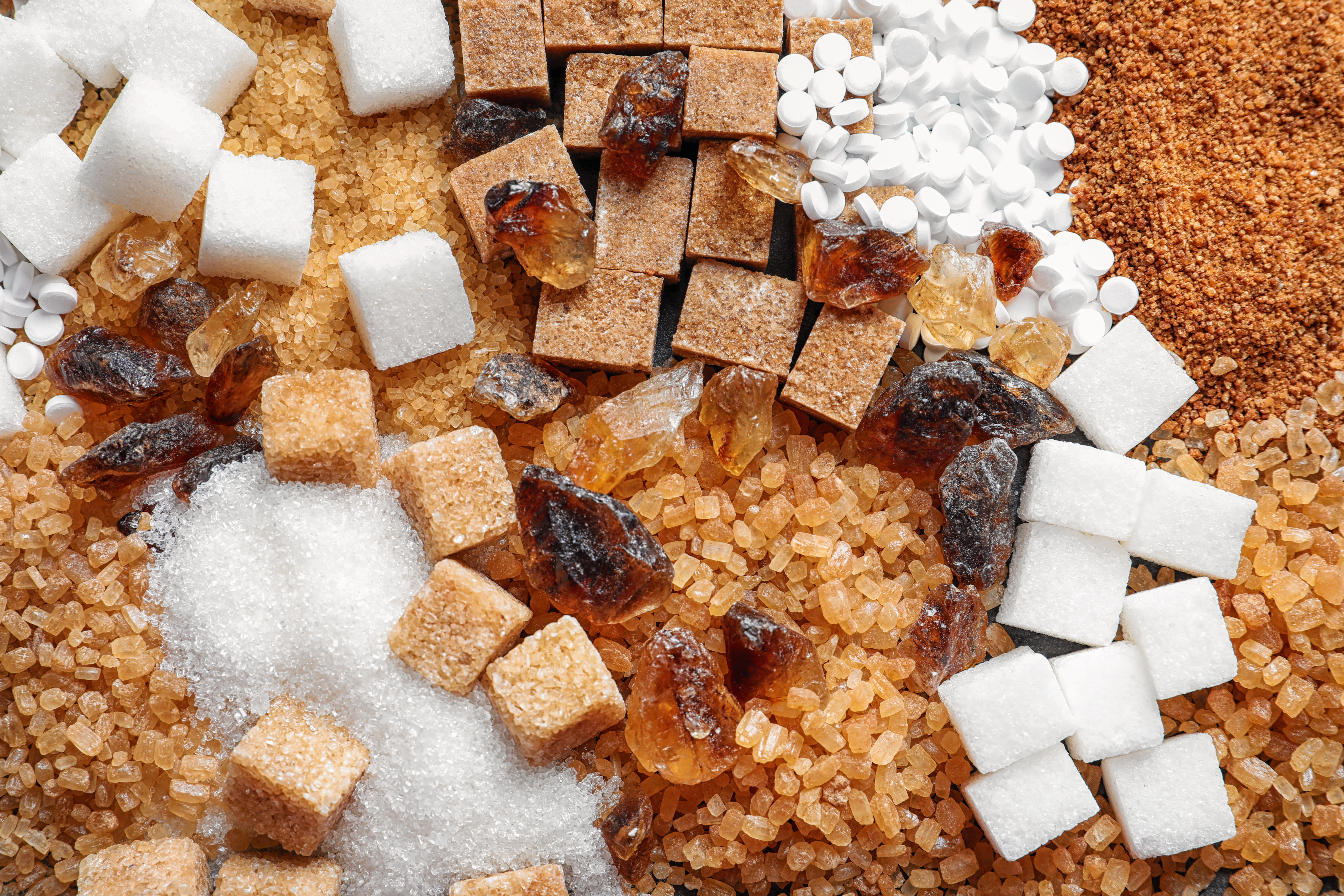
Today’s consumers want more from their favorite treats. They still want indulgence, but they also want lower sugar, fewer calories, better blood sugar management, higher fiber, cleaner labels, and ingredients that align with their nutritional goals. As a result, sugar substitutes have evolved from simple sweeteners into sophisticated formulation tools that allow manufacturers to create cookies, brownies, nutrition bars, chocolates, caramels, snack mixes, and other confections with dramatically different nutritional profiles while maintaining the eating experience consumers expect.
The challenge is that sugar does far more than simply make foods sweet. In baked goods and confections, sugar is one of the most multifunctional ingredients in the formula. Successfully replacing it requires understanding both food chemistry and commercial manufacturing.
How Sugar Functions in Food
Sugar performs dozens of critical functions during manufacturing and throughout a product’s shelf life. Depending on the product, sugar provides:
- Sweetness
- Bulk and structure
- Moisture retention
- Browning through caramelization and Maillard reactions
- Texture and tenderness
- Spread control in cookies
- Aeration during creaming
- Crystallization control in candies
- Preservation by reducing water activity
- Freeze point depression
- Flavor enhancement
When formulators reduce or eliminate sugar, they must replace all of these functions—not just sweetness. This is why successful sugar reduction is considerably more complex than swapping one ingredient for another.
The Major Categories of Sugar Substitutes
Modern formulations typically combine multiple classes of sweeteners rather than relying on a single ingredient. Each class contributes different functional and nutritional characteristics.
High-Intensity Sweeteners
These ingredients provide significant sweetness with little or no calories because they are used in extremely small quantities.
Examples include:
- Stevia (steviol glycosides)
- Monk fruit extract (mogrosides)
- Sucralose
- Acesulfame potassium (Ace-K)
- Aspartame
- Saccharin
How They Function Nutritionally
Because they are hundreds of times sweeter than sucrose, these sweeteners contribute negligible calories and minimal impact on blood glucose. Their primary purpose is sweetness rather than structure.
Manufacturing Considerations
Since these ingredients provide almost no bulk, formulators must add additional ingredients to replace sugar’s physical properties. Without these supporting ingredients, baked goods become dry, dense, or structurally weak, while confections lose their expected texture.
For this reason, high-intensity sweeteners are rarely used alone in packaged baked goods.
Sugar Alcohols (Polyols)
Sugar alcohols occupy a middle ground between sugars and non-nutritive sweeteners.
Common examples include:
- Erythritol
- Maltitol
- Xylitol
- Sorbitol
- Isomalt
- Mannitol
Nutritional Function
Polyols generally provide fewer calories than traditional sugar while producing a smaller blood glucose response.
Many have lower glycemic indices than sucrose, making them attractive for diabetic-friendly and lower-sugar products.
Functional Properties
Unlike high-intensity sweeteners, sugar alcohols provide bulk, mouthfeel, and moisture retention.
Different polyols have unique characteristics:
- Maltitol closely mimics sugar in chocolate and caramel.
- Erythritol offers excellent calorie reduction but can produce a cooling sensation.
- Xylitol provides sweetness similar to sugar but is toxic to dogs, requiring careful consumer labeling.
- Isomalt is widely used in hard candies because of its excellent stability.
Polyols are frequently paired with stevia or monk fruit to improve sweetness while maintaining desirable texture.
Rare Sugars
Rare sugars are naturally occurring sugars that behave differently metabolically than traditional sucrose.
Examples include:
- Allulose
- Tagatose
Nutritional Advantages
Allulose has become one of the fastest-growing ingredients in reduced-sugar products because it contributes very few calories while providing many of sugar’s functional properties.
Unlike many sweeteners, allulose browns similarly to sucrose, making it particularly valuable in baked goods.
Tagatose also provides lower calories while participating in browning reactions that improve flavor development.
Manufacturing Benefits
Rare sugars often allow formulators to create products that look and perform much more like conventional recipes compared with older sugar replacement systems.
Soluble Fibers as Sugar Replacers
Fiber ingredients have become increasingly important in better-for-you formulations because they replace bulk while adding nutritional value.
Common examples include:
- Chicory root fiber (inulin)
- Soluble corn fiber
- Resistant dextrin
- Tapioca fiber
- Oat fiber
- Acacia fiber
Nutritional Role
These ingredients can:
- Increase dietary fiber
- Improve satiety
- Reduce net carbohydrates
- Support digestive health
- Lower caloric density
Functional Role
Fibers contribute body, viscosity, moisture retention, and chewiness.
They are especially valuable in:
- Nutrition bars
- Protein bars
- Brownies
- Cookies
- Soft baked products
Many modern protein bars rely heavily on fiber syrups to achieve their characteristic chewy texture.
Natural Syrups and Alternative Sweeteners
Some manufacturers choose ingredients perceived as more natural while still providing sweetness.
Examples include:
- Honey
- Maple syrup
- Date syrup
- Coconut sugar
- Agave syrup
While these ingredients may appeal to consumers seeking minimally processed foods, they remain caloric sweeteners and generally affect blood glucose, although their glycemic responses can differ from refined sugar depending on composition and serving size.
These ingredients contribute distinctive flavors that become part of the product’s overall sensory profile.
Prebiotic Sweetening Systems
An emerging category combines sweetness with digestive health benefits.
These systems often utilize combinations of:
- Soluble fibers
- Chicory root fiber
- Resistant starches
- Functional carbohydrates
Rather than simply replacing sugar, these ingredients increase fiber while supporting digestive wellness, making them particularly attractive for functional snacks and nutrition products.
Choosing the Right Sugar Replacement for Different Products
Each product category presents unique formulation challenges.
Cookies
Cookies require careful management of spread, browning, moisture retention, and crispness. Allulose, soluble fibers, erythritol, and stevia blends are common choices depending on the desired nutritional profile.
Brownies
Brownies depend heavily on sugar for moisture and structure. Fiber syrups, allulose, maltitol, and selected polyol systems often provide the best balance of texture and sweetness.
Protein Bars
Protein bars rely extensively on fiber syrups, glycerin, soluble fibers, allulose, and high-intensity sweeteners to achieve softness while controlling sugar content.
Chocolate
Chocolate presents one of the greatest formulation challenges because sugar directly affects particle size, viscosity, and mouthfeel. Polyols such as maltitol and erythritol, along with allulose and stevia systems, are commonly used to maintain smooth texture while reducing sugar.
Caramels and Toffees
Caramels depend on sugar chemistry for color development, viscosity, and chewiness. Rare sugars, polyols, and specialized fiber systems can successfully replace portions of traditional sugar, but each substitution affects cooking temperatures, finished texture, and shelf stability. Developing successful reduced-sugar caramel requires careful balancing of solids, moisture, and cooking profiles.
The Better-for-You Spectrum
Not every sugar substitute serves the same consumer need. Successful product development begins by understanding the target market.
Some products emphasize:
- Reduced sugar
- No added sugar
- Low glycemic response
- High fiber
- Keto-friendly nutrition
- Diabetic-friendly positioning
- Lower calories
- Clean label ingredients
- Natural sweeteners
- Functional nutrition
Often, the best commercial products combine several sweetener technologies rather than relying on a single ingredient. For example, a protein cookie may include allulose for browning, soluble corn fiber for structure, stevia for sweetness, and glycerin for moisture retention. This layered approach helps deliver a familiar eating experience while meeting nutritional goals.
Commercialization: Where Formulation Meets Manufacturing
Developing a successful reduced-sugar product extends far beyond creating a great benchtop recipe. Sugar substitutes can significantly affect manufacturing performance, processing conditions, and shelf life.
Commercial production may require adjustments to:
- Mixing times and shear
- Dough rheology and depositability
- Extrusion characteristics
- Baking temperatures and profiles
- Moisture management
- Cooling and crystallization
- Chocolate enrobing performance
- Water activity and microbial stability
- Packaging selection
- Shelf-life validation
A formula that performs well in a small laboratory batch may behave very differently on full-scale production equipment. Understanding these scale-up challenges early in development helps reduce commercialization risk and shortens the path to market.
Partner with World Wide Gourmet Foods
At World Wide Gourmet Foods, we understand that replacing sugar is not simply about making a product sweeter—it is about engineering a complete food system that delivers exceptional taste, texture, nutrition, manufacturability, and shelf stability.
Our research and development team works with emerging brands and established food companies to evaluate the latest sweetener technologies, including rare sugars, polyols, soluble fibers, prebiotic ingredients, natural sweeteners, and high-intensity sweetener systems. Whether you’re developing a better-for-you cookie, a reduced-sugar brownie, a high-protein nutrition bar, a keto-friendly confection, or a premium chocolate product, we help identify the ingredient systems that best meet your nutritional, sensory, and commercial objectives.
Beyond formulation, World Wide Gourmet Foods specializes in commercialization and scale-up. We optimize recipes for production efficiency, validate processing parameters, manage ingredient interactions, and manufacture shelf-stable packaged baked goods and confections under rigorous food safety and quality systems. By combining deep expertise in ingredient functionality with commercial manufacturing capabilities, we help brands bring innovative better-for-you products to market with confidence.
As consumer demand for healthier indulgence continues to grow, the future belongs to products that successfully balance nutrition, taste, texture, and scalability. World Wide Gourmet Foods has the technical expertise and manufacturing experience to help transform that vision into a successful commercial product.
Leave a Reply