
There are many options for engagement both online and in person that for food brands. Each of these has a cost and a target audience. Some of these have monthly or annual fees, while others have one-time costs or costs per transaction.
Online Platforms can encompass a wide range of methods for engagement including virtual trade shows, wholesale catalog listings, company submissions/open calls, and wholesale ecommerce platforms. Most Online Platforms are monthly or annual subscription fees, with additional fees built in for submissions, transactions, or events.
In Person Events fall mostly into trade shows, distributor shows, gift shows, in store sampling, and curated buyer meetings. These Events mostly have singular costs associated with the event itself, though some of them require an annual membership to their association or trade groups
Online Platforms
Faire
Faire is an online wholesale marketplace for brands to sell their products to retailers. Faire at its core is a marketplace rather than a marketing resource, but because of how well designed it is, functions far better than other online marketing options out there.
Faire allows a brand owner to publish their catalog online, then create campaigns and participate in events that occur on the site. Faire also allows companies to promote their listings, offer samples, and upload their own customer base to the site in order to simplify the ordering process. Faire’s main draw for brand owners is that they offer a program called the Insider Partnership. This program allows North American brands to offer free shipping to Insiders, who are the top buyers on Faire, without covering all the costs themselves. In essence, you’ll pay only shipping costs that amount to 10-13% of the order total in exchange for offering free shipping to all Faire Insider-eligible Faire Direct orders. Faire will cover any shipping costs above that amount. Additionally, these orders also incur a 0% commission rate, rather than their normal 15% commission. All new customers for your brand also incur a one-time $10 new customer fee.
Faire’s success as both a wholesale ecommerce platform and as a place for brands and retailers to interact is what makes it such a great resource for brand owners. Because of its focus on wholesale, it makes it a great marketing tool in addition to a revenue stream. Faire also runs virtual trade shows during the year, which because of how much they promote them to retailers, make them great places to position your products online.
If you’d like to sign up for Faire, please use this link: https://www.faire.com/apply/worldwidegourmetfoodsinc
Online / In Person Platforms
RangeMe by ECRM

RangeMe is an online platform that allow brand owners and retailers to meet. This platform lets brand owners upload their product catalog online and once uploaded, that catalog is searchable by retailers. Retailers can then post their purchasing schedule and allow brand owners to submit products toward specific categories for each retailer, often for a $300 fee per submission if those products are selected for further review. RangeMe has multiple subscription tiers, each with their own benefits and considerations.
Free allows you to register one brand and upload 3 products. You can’t submit products to buyers, but buyers can find your products on the site.
Starter allows you to register one brand and upload unlimited products. You can submit products to buyer category reviews, which they call exclusive buyer immediate opportunities. This tier costs $99 per year.
Premium gives you everything from Starter, plus allows you get your brand RangeMe Verified. This process gives your brand preferential viewing to buyers, which they state equates to about 7x the viewership. Your products are promoted by RangeMe and you also get access to category level data and insights from NiesenIQ. This tier costs $1,399 per year.
Pro gives you everything from Premium and includes discounts for registering multiple brands, access to virtual buyer meetings, personalized onboarding/dedicated account manager, and 3 guaranteed face-to-face buyer meetings.
RangeMe is an extension of ECRM (Efficient Collaborative Retail Marketing) which is a trade show series that meets in different cities across the country. We’ll discuss ECRM in more detail below in the trade show section.
Infinite Ailse by SFA

Infinite Ailse by the Specialty Food Association also bridges the gap between online and in person engagement. The SFA started as a food association to promote high quality foods and beverages around the world. They hold two trade shows annually, Winter Fancy Food (now called Winter Fancy Faire) in San Diego and Summer Fancy Food in New York. They have added in a virtual marketplace called Infinite Ailse which allows brand owners to put their products up for sale and sampling to the clients of participating distributors. We’ll discuss their two trade shows in more detail below in the trade show section.
During trade shows, retailers can request samples or purchase products from exhibitors and SFA members through Infinite Aisle. Brand owners can also create promotions or participate in feature monthly positions in the marketplace’s retailer section.
The costs associated with joining the SFA is $300 in membership dues annually, plus a one-time $100 application fee for a Tier 1 membership. For a Tier 2 membership, you need to get your products qualified for a one-time fee of $150. Tier 1 membership means you get access to the SFA’s resources. Tier 2 membership means you can participate in their Fancy Food Shows and the Infinite Aisle. There is no cost associated with Infinite Aisle. You set your prices, and they add on freight and the distributor’s markup, so you net your original pricing.
Trade Shows / In Person Events
ECRM
ECRM (owners of RangeMe above) offers a series of smaller trade shows aimed at grouping specific category buyers with brands that make products that fit in those categories. The hook for ECRM trade shows is that buyers do not have to pay to attend the meetings. The trade shows are held at nicer hotels/resorts around the world, with networking events planned each evening. The trade shows are structured around buyers scheduling 10–20-minute meetings with brands to discuss products and opportunities. Each brand will get a guaranteed number of meetings with category managers and buyers from companies around the host country for the meeting. Each trade show has different pricing levels based on where the trade show is and what the category is. Most ECRM trade shows last about 3 days. Below is an example of what a trade show in Dallas, Texas would cost for a Snack Food Category.
RangeMe Discovery Hub – $6,500 for 1 attendee, a tabletop space, hotel accommodations, and 10-minute appointments. Extra attendees are $650 per person, per day.
Innovation Pipeline – $8,550 for 1 attendee, a private 10×10 booth, hotel accommodations, and 10-minute appointments. Extra attendees are $650 per person, per day.
Planning Session – $14,250 for 2 attendees, a private room for meetings, hotel accommodations, and 20-minute appointments. Extra attendees are $650 per person, per day.
These shows boast of a wide array of buyers, from grocery stores like Albertsons and HEB, to club stores like Costco, or to airlines like United.
Specialty Food Association

The Specialty Food Association (owners of Infinite Ailse above) runs two trade shows each year: Winter Fancy Faire (previously Winter Fancy Food Show) and The Summer Fancy Food Show. The Winter Show is typically held on the West Coast in January, either in San Francisco (2027), Las Vegas (2025), or in San Diego (2026). The Summer Fancy Food Show is held in New York City at the end of June. These trade shows bill themselves as the premier food trade shows in the United States, claiming large turnouts of attendees and marketplace visibility in general. This organization offers the change to submit your products for awards, called sofi awards. For a small fee ($80 per SKU), you can submit your products and have them blind judged (removed from packaging) by an independent panel of reviewers for taste. You can also submit an extra sample for no additional fee for a packaging review. If you win, these awards can offer prestige and create more opportunities for your brand to reach retailers and consumers.
Unfortunately, attendance for these two trade shows have been steadily declining since Covid. The SFA has tried to address this by moving the Winter Fancy Food Show around the West Coast from San Francisco to Las Vegas to San Diego back to San Francisco. They’ve also rebranded the Winter Fancy Food Show into Winter Fancy Faire. This rebranding is focusing on trying to create more networking opportunities and on new and emerging trends in food and beverages. The goal is a less traditional trade show experience with more emphasis on creating relationships in the industry.
To attend these shows, you’ll need to become a member of the Specialty Food Association. Membership dues are $300 per year. If you are an international company, you don’t have to become a member to attend the show. Fees for the show typically run about $5,000 for a 10′ by 10′ booth, plus incidental expenses like electricity and furnishings. For additional fees, you can place your products in a featured showcase, as well as advertise your product around the show and in show communications, both digital and print. This show series really presents itself as prestigious and a lot of companies attend both shows every year just for the sake of maintaining a brand presence.
These shows can be great ways to get your products in front of lots of people. There are several retail buyers who attend, but also a large number of press and manufacturing attendees. It’s recommended that you bring lots of samples as this is a show where people eat and drink a lot of the product. Given the finite nature of most marketing budgets, our recommendation would be to attend the shows first rather than exhibit on your own, either as a guest in a current exhibitor’s booth or as a company looking for packaging options, then walk the show to get a feel for it. You may find that you only need to exhibit at one of the two shows as it fits into your marketing strategy, or you may find that both shows offer unique opportunities.
Natural Products Expo West
The Natural Products Expo West is a trade show that happens annually, typically in March, on the West Coast in Southern California. This show is for companies or professionals who are focused on natural and organic products. This show used to have a companion show called Natural Products Expo East, but that show has been rebranded as Newtopia Now, which has a similar focus on natural and organic products with more of a focus on conscious CPG (consumer packaged goods). Newtopia Now is currently located in Denver, Colorado and is a much smaller show.
Expo West is considered to be the premier event in the country for natural and organic products. It has everything from food and beverages to health and beauty to pharmaceuticals and nutraceuticals and even natural living and home products. It is a massive show that seems to only get bigger every year.
Exhibiting at this show can be much more expensive than other shows. For example, a 5′ x 10′ booth (half the size of the smallest SFA show booth) is about $5,000, but a 10′ x 10′ booth is around $10,000. You can walk the show as an attendee for free if you can prove that you’re looking to purchase ingredients or products. Like with the SFA shows above, it is a good idea to walk the show first before exhibiting at it. That way you can see what would work and what wouldn’t for you and your brand.
Sweets & Snacks Expo
The Sweets & Snacks Expo is another trade show that happens on the West Coast, typically in May. In 2026, the show will be in Las Vegas. This is another large trade show, but one that is focused entirely on the sweets and snacks categories and is run by the National Confectioners Association. There is no requirement for products to be all natural or organic like the Natural Products West Expo. Sweets & Snacks is more of a traditional grocery store and major retailer focused show. This show draws buyers from those major corporations and as a result, draws more of the major food manufacturers. As a result, it can be hard to stand out from those massive booths and displays.
This show offers a startup option for a booth, with the fee being $3,900 for a 10′ x 10′ booth in their ‘Startup Street’. This gives you an option to try the show at a price lower than many of the trade shows on this list. If you’re company doesn’t qualify for the startup option, there are other options available, like hard wall booths, which are less than standard booths, but can be out of the way for the majority of attendees. These have two options: 5′ x 10′ for $1,975 or 10′ x 10′ for $3,950. Standard booths come in three pricing levels: NCA Member of $47.50 per square foot ($4,750 for a 10′ x 10′), Non-Member of $66.75 per square foot ($6,675 for a 10′ x 10′), or Snack Exhibitor (no sweets) of $53.25 per square foot ($5,375 for a 10′ x 10′). Membership dues for the National Confectioners Association are calculated by your sales, so for example, dues for a company selling $1,000,0000 worth of confections would be around $2,290 per year.
Plant Based World Conference & Expo
The Plant Based World Expo North America is a trade show that exclusively focuses on plant-based products and alternatives to meat, fish, eggs, and dairy. This trade show claims that this industry is set to triple in business volume in the next ten years and positions itself as the best way to find new plant-based trends and discover plant-based products. It typically occurs in December of each year in New York City. If your products can be considered plant-based, this would be a great show to walk the first year, then plan on exhibiting the following year so you can strategize your booth.
The show has a base rate of $37.95 per square foot ($3,795 for a 10′ x 10′) for a booth, with a convenience fee of $1,950 per 10′ x 10′ booth for carpet, table, chairs, outlet, waste basket, and freight to and from the booth and the warehouse. This makes the show about average in terms of pricing. Again, because this show is in New York City, that can impact the overall costs for this show as hotels can be more expensive there.
However, the advantage of this show is that it is entirely focused on one category, which means you’ll get more focused buyers rather than people who may not purchase your category. It will also have more in the way of educational events and networking opportunities for this category than other more broadly focused shows. If their claims of the growth of the plant-based category prove true, it would be good to present your plant-based products at this show at least once in order to see if you can get in front of some of the larger retail corporations’ buyers.
SupplySide West

Supply Side West is a trade show that focuses on innovation in food, beverages, and supplements. It takes place every fall, typically in Las Vegas. The organization that runs it is called SupplySide Global. This show boasts over 20,000 participants and over 1,600 exhibiting companies, all with a focus on new trends and innovations in those three categories. It also offers over 130 hours of educational and informational events for exhibitors and attendees.
This is one of the most expensive shows to exhibit at, with inline 10′ x 10′ booths running about $9,110. As this is a show that prides itself on the total number of attendees and with its focus on innovation, the price point could be worth it. However, it seems like a show that would benefit, like the shows above, with attending the event first to strategize whether it would be a good fit for your brand to exhibit.
If your brand has a focus on innovative techniques, ingredients, or packaging, this could be a good show at which to exhibit. If your brand falls more into traditional or classical versions of products in the marketplace, this would be a good show to attend only.
National Grocers Association Show
The National Grocers Association (NGA) is an organization that supports independent grocery stores and their distributors. Affiliated associations, manufacturers, and service suppliers can also join as long as they support the NGA’s mission. That mission is to support the economic advancement of independent grocery stores.
The NGA offers an annual show, called The NGA Show, in February in Las Vegas. The cost to exhibit a 10′ x 10′ booth is around $2,785. This is a show that focuses on independent grocers, but large corporations attend as well. Businesses like Albertsons and Wakefern attend as well as smaller chains like Nugget Marekts or Roche Bros.
If you’re looking to expand your brand to smaller independent businesses, this could be a good option as it is a cheaper show than some of the other options out there. The key with shows that have lots of smaller businesses is to reach out to contacts at each of these shows and arrange for meetings during the show itself. Making the buyer for a 4 or 5 store chain feel like you really care about making a connection can help you shore up your sales goals for that region. Frequently, smaller chains can do as much business as larger chains because of their ability to give your brand preferential placement. Don’t discount the ability of a small chain to alter their planogram to accommodate your products versus going on shelf at a major grocery chain that won’t actively promote your brand.
AmericasMart Atlanta & Las Vegas


AmericasMart is a unique in-person trade show that bridges the gap between national trade show and regional gift show. The Atlanta location hosts four markets for gift and home (food included), once every season (Spring, Summer, Fall, Winter). These shows are held in the AmericasMart building in Atlanta, Georgia. The Las Vegas location hosts two markets each year. These shows have a wide audience and attract buyers from multiple categories. The AmericasMart shows are great ways to get your products in front of a wide variety of smaller businesses, especially tailored to the Southeast and Southwest regions, however large corporations do attend those events as well, just not in the same quantities as some of the shows above. Both locations offer permanent and temporary spaces. The permanent spaces need to be staffed year-round like a show room, while the temporary spaces are tied to weeklong markets held throughout the year.
AmericasMart does not post their booth rates for the four markets in Atlanta as they are so dependent on location in the permanent building. Because the spaces are divided by floor and category, booking booth space can be a challenging mix of finding value with ensuring that buyers actually can find your booth. For Las Vegas, it is only two shows per year, and the booth rate is $34.00 per square foot ($3,400 for a 10′ x 10′ booth).
These two markets appear so far down this list because while they boast of national retailer attendees, they skew heavily into the local region in terms of attendees. That classifies them more as a regional show rather than a true national trade show, despite their claims otherwise. Weighing all the options, you might be better off doing one of the shows above, then supplementing with cheaper regional or distributor shows than hybrid regional shows like these ones.
Distributor Shows
UNFI

Distributor shows like the ones that UNFI or KeHE operate require one thing: that you are currently working with that distributor. Once you use the other trade shows to lock down new customers, those customers might direct you towards distributors like UNFI. In order to better reach the other customers that UNFI services, you can participate in their distributor shows and expand your customer base within the distributor. Shows like this one are great ways to use your marketing budget in a directed way that has a greater chance of expanding your customer base and improve the efficiency of your distributor partnership by increasing your order totals and lessening the impact freight has on your bottom line.
UNFI, or United Natural Foods, Inc. is a distributor of natural, organic, and specialty foods. Because of their partnerships with retailers like Sprouts or other high end grocery chains, you’ll find that if you want to work with those grocery stores, you’ll end up working with UNFI. UNFI purchased Supervalu in 2018 and expanded their reach to several new grocery chains, part of the trend of distributor consolidation that has been occurring lately.
UNFI operates several shows during the year, focusing on different regions. Their calendar starts with the West in January (typically in Southern California), Central/East in February (typically in Florida), Central/West in mid-July (typically in Nevada), and East in late July (typically in Connecticut). The cost for these shows varies but typically averages around $2,000 per show.
KeHE

KeHE is another distributor of natural, organic, and specialty foods. KeHE, like UNFI, purchases regional distributors like DPI Specialty Foods, in order to compete with other distributors during this recent push for consolidation. KeHE has partnerships with major retailers like Whole Foods and Kroger, so you’ll find as you work with these retailers that they will direct you towards their preferred distributor.
KeHE operates two major shows each year, the Summer Show in January (typically in Denver) and the Holiday Show in June (typically in Chicago). These shows are hybrids in that there is a virtual show that happens for two weeks and an in person show that happens for two days. The cost for these shows varies, but typically averages around $7,000 per show, depending on what kind of vendor you are. These shows are more expensive than UNFI’s because they are national shows, rather than regional shows. KeHE also runs Tabletop Shows, which are regionally focused events where you show your products to a much smaller group of buyers. The Tabletop Shows are much less expensive than the national shows and are only 1 day events.
Regional Gift Shows
Regional Food & Gift Shows
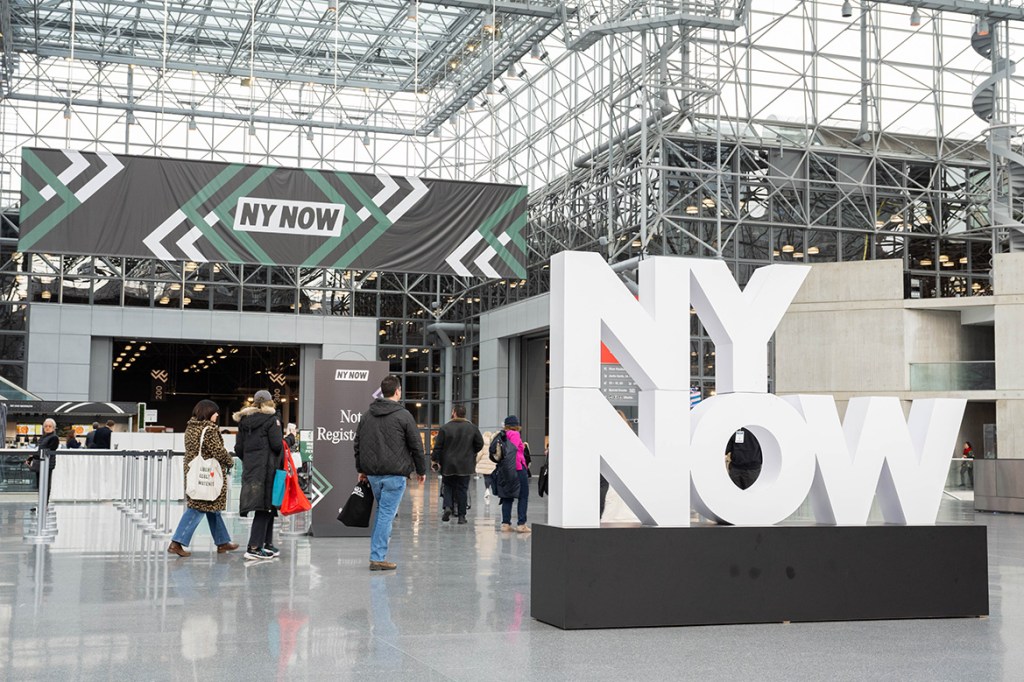
If you are looking to engage with local buyers, regional gift shows can be good places to meet them and offer samples of your products. For some retail companies, they only attend these local shows as their consumers have been looking to support more and more local businesses.
Examples of Regional Food & Gift Shows include Seattle Mart, California Marketplace, Dallas Market Center, Mix Apparel & Gift Mart in Chicago, NY Now in New York, or Miami Merchandise Mart. Several of these shows operate with a very similar approach to AmericasMart, offering both permanent and temporary spaces, and hosting markets throughout the year.
These shows can have a wide range of costs, from temporary booths to permanent spaces. In several of these shows, local distributors may have already rented permanent spaces, so renting a booth for yourself might not be necessary if you can negotiate space within that distributor’s booth. Depending on the audience you’re trying to reach and how successful you are in reaching that audience, these shows might not need to be an annual expense.
 World Wide Gourmet Foods