

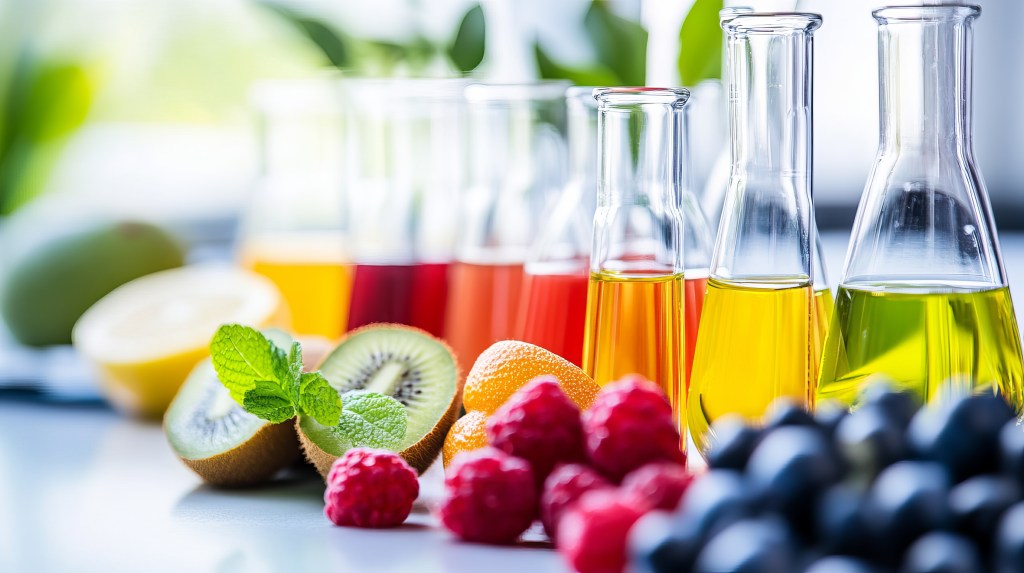
Food flavors are everywhere — from the vanilla in your ice cream to the smoky note in a barbecue chip. But how are these flavors actually created? And what’s the difference between natural and artificial flavors? Let’s break it down.
How Flavors Are Created
Extracts
Extracts are made by soaking raw materials (such as vanilla beans, coffee beans, citrus peels, or herbs) in alcohol or another solvent. This process pulls out the key aromatic compounds, leaving behind a concentrated liquid that can be added to foods and beverages. Vanilla extract, peppermint extract, and almond extract are all common examples.
Flavors (Liquid Concentrates)
Flavors are more complex than single extracts. A flavor formula might combine dozens of different compounds to recreate a sensory profile — say, “strawberry” or “buttered popcorn.” These compounds may come from natural sources, artificial sources, or both. Flavorists (sometimes called “flavor chemists”) carefully balance sweetness, acidity, and aroma to mimic or enhance taste.
Powders
Powdered flavors are made by converting liquid extracts or flavor oils into a dry form. This is typically done through spray-drying, where the liquid flavor is blended with a carrier (such as maltodextrin or gum arabic) and then quickly dried into a fine powder. Powders are convenient for dry mixes, snacks, and baked goods where liquid extracts might not be stable or practical.
Natural vs. Artificial Flavors
The terms natural and artificial can be confusing. Both types often contain the same chemical compounds — the difference is in how they’re sourced.
- Natural Flavors:
Derived from plant or animal sources. For example, natural vanilla flavor comes from vanilla beans, and natural citrus oils come from orange or lemon peels. The extraction process may involve distillation, fermentation, or enzymatic treatment, but the starting point must be something found in nature. - Artificial Flavors:
Created in a lab to mimic the chemical structure of natural flavors. For example, vanillin — the primary flavor molecule in vanilla — can be synthesized from petroleum or wood pulp. While chemically identical to the vanillin found in vanilla beans, it’s classified as artificial because it wasn’t derived directly from the plant.
Why Use One Over the Other?
- Consistency & Cost: Artificial flavors are often cheaper and more stable than natural ones, making them popular in large-scale food manufacturing.
- Availability: Natural sources can be limited (e.g., real vanilla beans are expensive and subject to crop failures).
- Labeling & Perception: Consumers increasingly prefer “natural flavors,” even though artificial flavors are chemically similar and rigorously tested for safety.
The Bottom Line
Both natural and artificial flavors are tools that food manufacturers use to create enjoyable, consistent products. Extracts bring authentic notes, powders provide convenience, and flavors — whether natural or artificial — make foods taste the way we expect them to.
At World Wide Gourmet Foods, we work with brand owners to develop products that balance great taste, consumer expectations, and production efficiency. Whether your project requires natural flavors, extracts, or cost-effective alternatives, our team has the expertise and equipment to bring your vision to life.
 World Wide Gourmet Foods